With electricity tariffs continuing torise in Sri Lanka through 2026, more homeowners are asking the same question:is it time to switch from an electric geyser to a solar hot water system?Both options deliver hot water reliably, but they work very differently — andthat difference shows up clearly on your monthly electricity bill.
This guide compares a solar hot water system and an electricgeyser side by side, walks through how to decide which is right for yourhome, and answers the most commonly searched questions Sri Lankan homeownershave about switching to solar.
An electric geyser heats water using anelectric heating element inside an insulated tank, drawing power directly fromthe grid every time hot water is used or the tank reheats.
A solar hot water system usesrooftop solar collectors to absorb heat from sunlight and transfer it to waterstored in an insulated tank, with an electric backup element for cloudy days orhigh-demand periods. Because Sri Lanka receives strong, consistent sunlightyear-round, solar systems can cover the large majority of a household's hotwater needs without drawing on the grid.
This single difference — where theheating energy comes from — is what drives the long-term cost gap between thetwo systems.
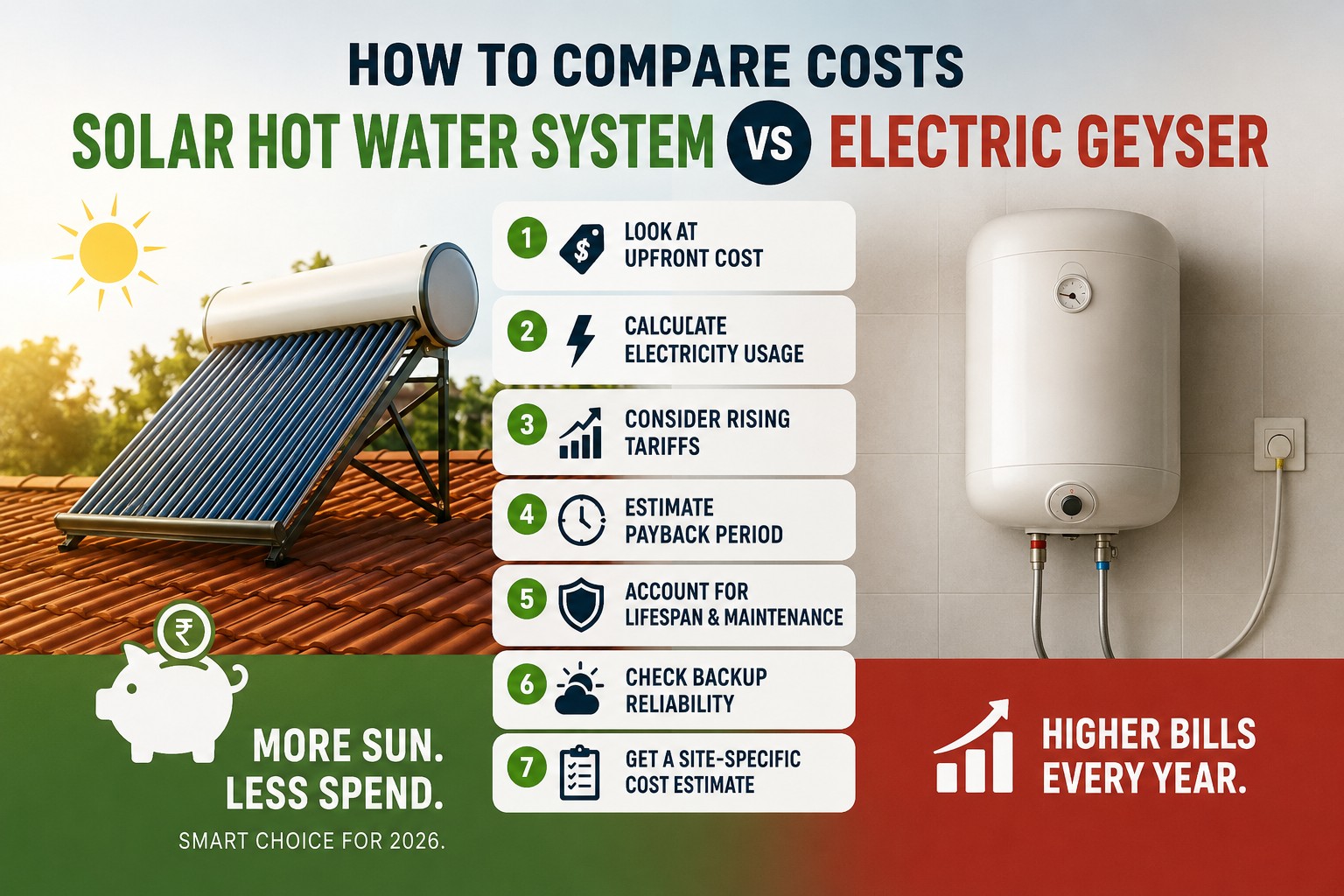
An electric geyser is cheaper to purchaseand install initially. A solar hot water system requires a higher upfrontinvestment, covering the collector, tank, mounting structure, and installationlabour.
An electric geyser runs almost entirelyon grid electricity, and water heating is typically one of the largestcontributors to a household's electricity bill. A solar hot water system relieson sunlight for most of its heating, with the backup element used onlyoccasionally — meaning a significantly smaller electricity draw month to month.
As domestic electricity tariffs havecontinued to increase in 2026, the cost of running an electric geyser daily hasrisen alongside them. A solar hot water system insulates your household frommuch of this tariff exposure, since most of your hot water energy comes fromsunlight rather than the grid.
While the math varies by household size,hot water usage, and system capacity, most solar hot water systems recovertheir higher upfront cost over a number of years through reduced electricitybills — after which the savings continue for the remaining lifespan of thesystem.
A well-maintained solar hot water systemtypically lasts longer than a standard electric geyser and requires onlyroutine annual servicing — tank cleaning, valve checks, and leak inspection —to maintain efficiency. Electric geysers, by contrast, often need element orthermostat replacements more frequently due to constant electrical cycling.
A solar hot water system with an electricbackup element gives you the best of both — solar savings on sunny days anduninterrupted hot water during cloudy weather or high demand, without fullyreverting to electric-only costs.
Because system sizing, roof type, andhousehold hot water demand all affect both upfront cost and long-term savings, themost accurate comparison comes from a professional site assessment rather thangeneric estimates.
A trusted provider like St. Anthony's Service's solar hot water servicecan assess your roof, hot water usage, and budget to give you a realisticcomparison between sticking with an electric geyser and switching to solar.
A few trends are pushing more homeownerstoward solar hot water systems this year:
● Rising electricity tariffs mean the cost gap between solar and electric heating widens every timerates increase.
● Consistent year-round sunlight in Sri Lanka makes solar collectors highly effective compared to lesssunny climates.
● Longer system lifespans mean the investment continues paying off well beyond the initialpayback period.
● Lower long-term maintenancecosts, since solar systems experience less wear fromconstant electrical cycling.
● Increased awareness of totalcost of ownership — homeowners are increasinglycomparing lifetime cost rather than just the purchase price.
1. Is a solar hot water system reallycheaper than an electric geyser in the long run? Yes,in most cases. While the upfront cost is higher, a solar hot water systemsignificantly reduces electricity usage for hot water, leading to lower runningcosts over the system's lifespan — especially as electricity tariffs rise.
2. How long does it take for a solarhot water system to pay for itself? The payback perioddepends on system size, household hot water usage, and electricity tariffrates, but most homeowners recover their investment through reduced electricitybills within several years, after which savings continue.
3. Does a solar hot water system workon cloudy days in Sri Lanka? Yes. Solar hot watersystems include an electric backup element that activates automatically whensunlight is insufficient, ensuring consistent hot water regardless of weather.
4. How long does a solar hot watersystem last compared to an electric geyser? Withproper maintenance, a solar hot water system generally lasts longer than astandard electric geyser, which tends to require more frequent element orthermostat replacements due to continuous electrical heating cycles.
5. Is an electric geyser better forrenters or short-term homes? Often, yes. Electricgeysers have a lower upfront cost and simpler installation, making thempractical for renters or properties where a long-term investment doesn't makesense.
6. How much maintenance does a solarhot water system need? Solar hot water systemstypically need annual servicing, including tank inspection, valve checks, andleak detection, to maintain efficiency and extend the system's lifespan.
7. Can I switch from an electricgeyser to a solar hot water system in an existing home? Yes. Most homes can be retrofitted with a solar hot water system,though roof strength, orientation, and available space should be assessed firstto determine the right system size and placement.
8. What factors affect the cost ofinstalling a solar hot water system? Cost depends onsystem capacity, collector and tank type, installation complexity, roofstructure, and backup heating options — all of which a professional siteassessment can evaluate accurately.
Choosing between a solar hot watersystem and an electric geyser comes down to balancing upfront costagainst long-term savings. With electricity tariffs continuing to rise in SriLanka through 2026, a solar hot water system increasingly offers the strongerfinancial outcome over time — particularly for homeowners planning to stay intheir property for several years.
Since 1942, St.Anthony's Service has helped homeowners and businesses across SriLanka install, repair, and maintain both solar hot water systems and electricgeysers, with certified technicians and transparent, honest pricing.
Not sure which option makes the mostsense for your home? Getin touch with our team for a personalised cost comparison and siteassessment.