Water heating is one of the largestcontributors to household electricity bills in Sri Lanka, especially as tariffscontinue to rise. If you're looking for a practical way to cut costs withoutchanging your daily routine, learning how to reduce your electricity billusing a solar water heater is one of the most effective long-term steps ahomeowner can take.
This guide explains exactly how a solarwater heater lowers electricity usage, walks through the steps to maximizethose savings, and answers the questions Sri Lankan homeowners most frequentlysearch before making the switch.
Electric geysers heat water by drawingpower directly from the grid every time the tank reheats — and because hotwater is used daily for bathing, washing, and cleaning, this heating cyclerepeats constantly throughout the day. In many households, water heating aloneaccounts for a significant share of total electricity consumption, particularlyin homes with multiple bathrooms or higher usage patterns.
As electricity tariffs in Sri Lanka havecontinued to rise, the cost of running an electric geyser day after day hasincreased right along with them — which is exactly the cost a solar waterheater is designed to reduce.
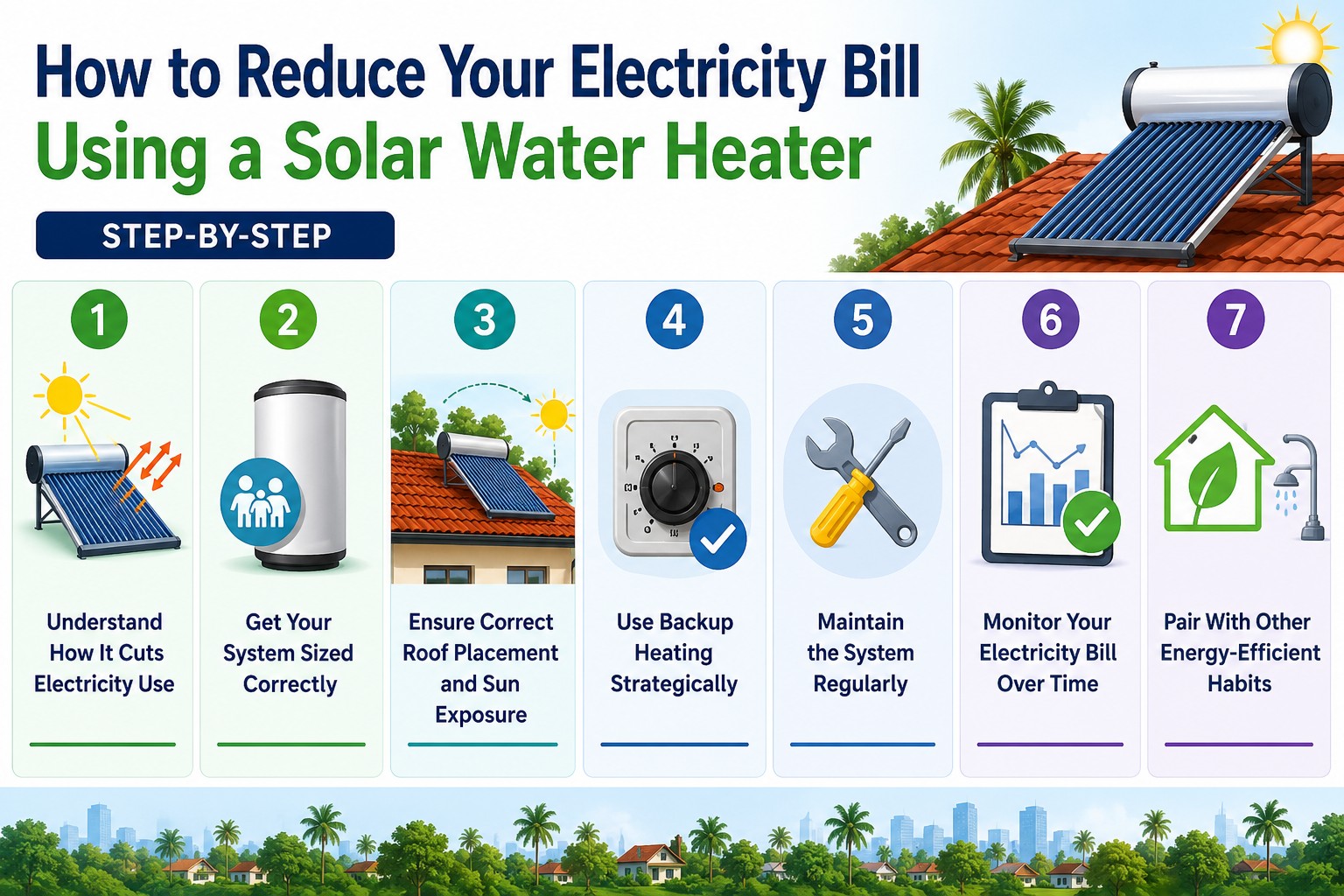
A solar water heater uses rooftopcollectors to absorb heat from sunlight and transfer it directly to waterstored in an insulated tank. Because Sri Lanka receives strong, consistentsunlight throughout the year, the system can meet most of a household's hotwater needs without drawing power from the grid — with an electric backupelement only kicking in when needed.
Savings depend heavily on choosing theright tank capacity and collector size for your household's hot water demand.An undersized system will rely more heavily on the electric backup, reducingyour savings, while an oversized system adds unnecessary upfront cost withoutproportional benefit.
Collector placement has a direct impacton heating efficiency. Panels need to be positioned to capture maximum sunlightthroughout the day — incorrect angle or orientation significantly reduces howmuch of your hot water comes from solar energy versus backup electricity.
Most solar water heaters include anelectric backup element for cloudy days or periods of high demand. Reducingunnecessary reliance on this backup — for example, by timing high hot-water-usageactivities for daylight hours — helps maximize the proportion of heatingpowered by solar energy.
A poorly maintained solar water heaterloses efficiency over time due to mineral buildup, leaks, or valve issues — allof which can quietly increase reliance on the backup heating element. Routineannual servicing keeps the system operating at full efficiency, protecting yoursavings long-term.
After installation, tracking yourelectricity bill against previous usage gives you a clear, practical view ofhow much your solar water heater is actually saving — and can highlight earlyif something (like a maintenance issue) is reducing those savings.
While the solar water heater does most ofthe work, pairing it with habits like using insulated piping, avoidingexcessively high thermostat settings, and addressing leaks promptly furtherreduces the load on your backup heating element.
For a system that's correctly sized,positioned, and maintained from day one, working with an experienced providerlike St. Anthony's Service's solar hot water serviceensures you get the maximum possible savings rather than a system thatunderperforms its potential.
The exact savings a household sees dependon several factors:
● Household size and hot waterusage patterns — larger households generally seelarger absolute savings.
● System size and quality ofinstallation — a correctly sized, well-installedsystem performs significantly better than an undersized or poorly placed one.
● Current electricity tariffrates — as tariffs rise, the relative savings fromsolar heating increase as well.
● Local climate and sun exposure — homes with unobstructed roof access to sunlight will see strongersolar performance than heavily shaded properties.
Because these factors vary by household,the most accurate way to estimate your potential savings is through a siteassessment rather than a generic percentage figure.
The longer you own the system, the morethese savings compound — particularly as electricity tariffs continue to trendupward.
1. How to reduce your electricity billusing a solar water heater effectively? The mosteffective way is to ensure your system is correctly sized for your household,positioned for maximum sun exposure, maintained regularly, and paired withsmart use of the electric backup element during peak sunlight hours.
2. How much electricity can a solarwater heater actually save? Savings vary based onhousehold size, system sizing, sun exposure, and electricity tariff rates, butwater heating is typically one of the largest electricity costs in a home —making it one of the most impactful areas to reduce through solar.
3. Does a solar water heater workduring Sri Lanka's monsoon season? Yes. While solarefficiency is reduced on cloudy or rainy days, the electric backup elementensures consistent hot water year-round, with solar heating resuming oncesunlight returns.
4. How long does it take to seesavings after installing a solar water heater? Savingstypically appear from the very first electricity bill after installation, sincethe system immediately reduces reliance on grid-powered water heating.
5. Do I need to change my daily habitsto save money with a solar water heater? Notsignificantly, though using hot water during daylight hours when possible andavoiding unnecessary reliance on the backup heater can help maximize savingsfurther.
6. Is a bigger solar water heateralways better for saving money? Not necessarily. Anoversized system increases upfront cost without proportional savings, while anundersized system relies more heavily on costly backup electricity. Correctsizing for your household is key.
7. How often should a solar waterheater be serviced to maintain savings? At least oncea year. Regular servicing — including tank cleaning, valve checks, and leakdetection — prevents efficiency loss that could quietly increase yourelectricity usage over time.
8. Can a solar water heater fullyeliminate my electricity bill for hot water? Notentirely, since most systems include an electric backup for cloudy days andpeak demand. However, it can dramatically reduce the portion of yourelectricity bill attributed to water heating.
Learning how to reduce your electricitybill using a solar water heater comes down to getting the fundamentals right —correct sizing, proper placement, regular maintenance, and smart use of backupheating. With Sri Lanka's strong year-round sunlight and rising electricitytariffs, a solar water heater offers one of the most reliable ways to lower arecurring household expense over the long term.
Since 1942, St.Anthony's Service has helped homeowners across Sri Lanka install,maintain, and repair solar water heaters that deliver real, lasting savings.
Want to know how much you could save witha solar water heater? Getin touch with our team for a personalised assessment.