With rising electricity costs and increasing interest in energy-efficient living, many homeowners and businesses in Sri Lanka are considering solar water heating systems. One of the most common questions people ask before investing is: How much do solar water heaters cost?
The answer depends on several factors including tank capacity, installation requirements, system quality, brand, and long-term maintenance needs.
In this complete guide, St. Anthony`s Service explains everything you need to know about solar water heater pricing, installation costs, maintenance expenses, and how to choose the right system for your property.
A solar water heater uses sunlight to heat water instead of relying entirely on electricity or gas. These systems collect solar energy through rooftop collector panels and store heated water in insulated tanks for daily use.
Solar water heaters are commonly used in:
They are popular because they significantly reduce electricity bills while providing reliable hot water throughout the year.
For professional installation, repair, and maintenance solutions related to How much do solar water heaters cost, expert guidance helps ensure you choose the right system for your budget and property needs.
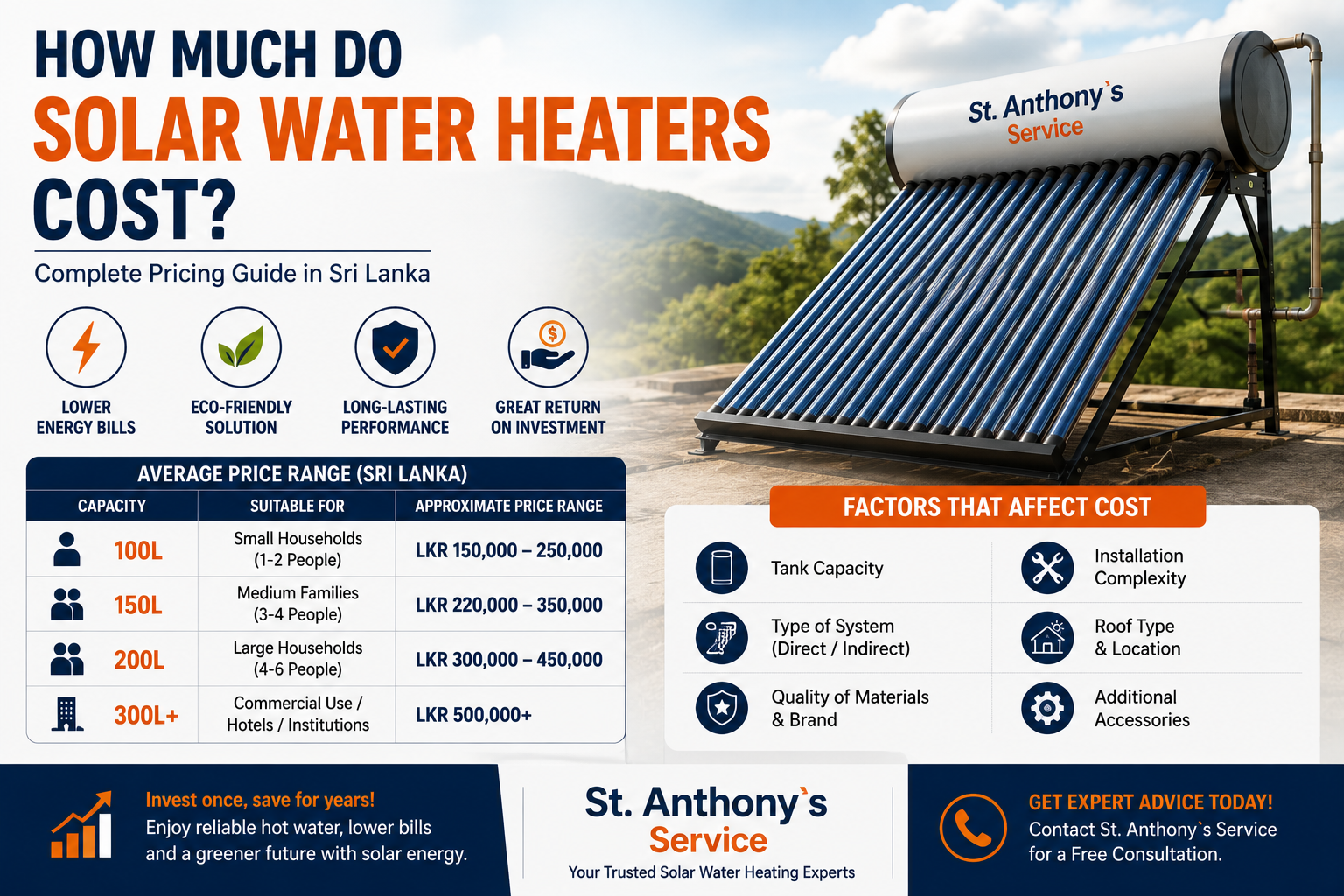
The cost of a solar water heater varies based on system size and quality.
System Capacity Suitable For Approx. Price Range
100L Small households LKR 150,000 - 250,000
150L Medium families LKR 220,000 - 350,000
200L Large households LKR 300,000 - 450,000
300L+ Commercial use LKR 500,000+
These estimates may change depending on installation complexity, material quality, and imported component prices.
This is one of the most searched questions related to solar water heating systems.
Several important factors influence the total cost.
Larger tanks cost more because they store greater volumes of hot water.
100L Systems
Best for:
150L Systems
Suitable for:
200L+ Systems
Recommended for:
Choosing the correct tank size prevents unnecessary energy waste and improves efficiency.
There are different solar heating technologies available.
These heat water directly through solar collectors.
Advantages
Disadvantages
These use heat transfer fluids to warm the water.
Advantages:
Disadvantages:
Premium systems typically use:
Higher-quality materials increase initial investment but reduce long-term repair costs.
Installation costs vary depending on:
Imported systems and premium brands often cost more but may offer:
Choosing the right system helps maximize savings and long-term performance.
Estimate how much hot water your household uses daily.
Usage Type Approximate Daily Consumption
Shower 30-50L
Kitchen use 15-20L
Laundry 20-40L
Solar collectors require sufficient sunlight exposure.
Ideal roof conditions include:
Look for:
Some cheaper systems require more frequent repairs and servicing.
Choosing reliable equipment reduces long-term expenses.
For most households, yes.
Although the initial investment is higher than traditional electric heaters, solar systems provide long-term savings.
One of the biggest advantages is reduced energy consumption.
Solar energy reduces carbon emissions.
Well-maintained systems can last 10-20 years.
Energy-efficient homes often attract more buyers.
Savings depend on household size and electricity usage.
Household Size Potential Monthly Savings
Small household LKR 3,000 - 5,000
Medium household LKR 5,000 - 8,000
Large household LKR 8,000+
Over several years, these savings can offset the initial installation cost.
When calculating total investment, many people overlook additional expenses.
Working with experienced technicians helps avoid unexpected installation problems.
Regular maintenance is essential for long-term efficiency.
System Type Service Interval
Residential systems Every 12 months
Commercial systems Every 6-12 months
This is another frequently searched topic among property owners.
Ignoring these issues may lead to expensive repairs or complete system failure.
Understanding the installation process helps homeowners prepare properly.
Technicians assess:
The correct tank size and collector type are selected based on usage.
Solar collector panels are securely installed on the roof.
Hot and cold water lines are connected to the system.
The entire system is tested before operation.
Technicians verify heating efficiency and safety.
Yes, although heating efficiency may reduce during cloudy periods. Most systems include backup heating options.
Most quality systems last between 10-20 years with proper maintenance.
Solar systems usually provide greater long-term savings and lower electricity usage.
Yes. Many households experience noticeable reductions in monthly energy costs.
Lower-cost systems may use inferior materials, resulting in shorter lifespans and higher maintenance costs.
There are several ways to reduce overall expenses.
Always compare:
Oversized systems increase unnecessary costs.
Routine servicing prevents major repair expenses.
Improper installation often causes leaks, poor efficiency, and premature failure.
Professional installation ensures:
Poor installation can shorten the lifespan of even high-quality systems.
If you are wondering How much do solar water heaters cost, the answer depends on system size, installation requirements, material quality, and long-term maintenance considerations.
While the initial investment may seem significant, solar water heaters provide excellent long-term savings through lower electricity bills and reliable hot water supply.
Choosing the right system, performing regular servicing, and working with experienced professionals are essential for maximizing performance and durability.
For expert guidance, installation support, maintenance, and repairs, contact St. Anthony`s Service for reliable solar hot water solutions tailored to your property and budget.