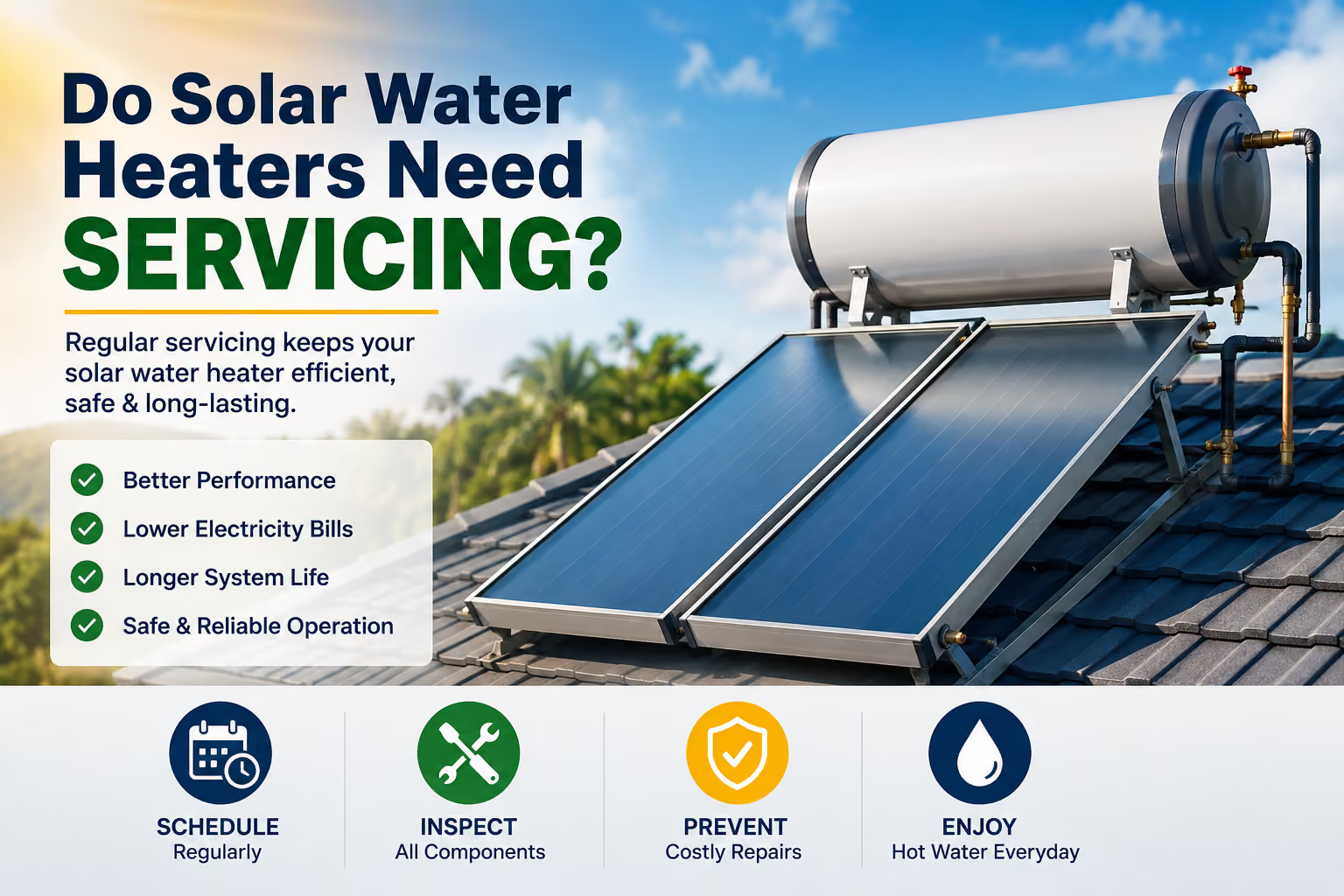
It's one of the most common questions homeowners ask after installing a solar hot water system: do solar water heaters need servicing? The short answer is yes — and more regularly than most people assume. Solar water heaters are designed to be low maintenance compared to many home appliances, but "low maintenance" doesn't mean "no maintenance."
Understanding what servicing involves, how often it's needed, and what happens when it's skipped is what separates a system that delivers strong energy savings for many years from one that gradually underperforms without anyone realising why.
A solar water heater operates in demanding outdoor conditions every single day — exposed to UV radiation, heat, rain, humidity, and dust year-round. Over time, these conditions take a toll on every component of the system, from the collector panels on the roof to the storage tank and the valves and pipes connecting them.
The most important reason solar water heaters need servicing is that the degradation happens gradually and silently. Unlike a geyser that suddenly stops producing hot water, a neglected solar system tends to lose efficiency slowly — relying more and more on its electric backup element to compensate for reduced solar performance. The system continues producing hot water, so the homeowner doesn't realise anything is wrong. But the electricity bill climbs quietly in the background as the backup element works harder than it should.
Regular servicing catches and reverses this gradual decline before it becomes significant — protecting both the system's performance and the homeowner's energy savings.
Skipping regular servicing doesn't immediately break a solar water heater. What it does is allow a series of small, preventable issues to compound over time:
Mineral scale buildup accumulates inside the tank and pipes, reducing heating capacity over time — particularly relevant in Sri Lanka where water supply often carries moderate to high mineral content.
Anode rod depletion goes undetected, exposing the tank itself to corrosion once the sacrificial rod is exhausted — a far more expensive problem than a straightforward rod replacement.
Collector efficiency drops as dirt and environmental deposits accumulate on the glass surface and potentially degrade the absorber coating, meaning less solar heating and more backup electricity used.
Safety valves wear out without detection — a failing pressure relief valve can lead to dangerous pressure buildup inside the tank.
Pipe insulation deteriorates, causing increasing heat loss between the collector and tank, further reducing overall system efficiency.
The combined effect is a system that costs more to run, delivers less solar-heated water, and reaches the end of its useful life significantly earlier than a properly maintained one would.
The recommended servicing schedule for a solar water heater has three tiers:
Once a month, homeowners should visually inspect the system — checking collector panels for dust and debris accumulation, confirming hot water output remains consistent during daylight hours, monitoring electricity usage for unexplained increases, and checking visible pipes and connections for any signs of drips or moisture.
Every three to six months, extend the inspection to include: pipe insulation condition, the pressure relief valve for continuous dripping, the tank exterior for rust or moisture, and roof mounting brackets for any loosening or movement.
At minimum once a year, a certified technician should carry out a comprehensive service covering: internal tank cleaning to remove mineral scale, anode rod inspection and replacement when needed, collector efficiency testing, full valve and thermostat testing, pipe joint and seal inspection, backup element and electrical component checks, and roof mounting assessment.
This annual professional service is the most critical element of the schedule — and the one most commonly deferred by homeowners who assume the system is fine because it's still producing hot water.
The technician inspects the collector panels for damage, degradation of the absorber coating, and dirt or debris on the glass surface. Professional cleaning removes buildup that homeowner cleaning may not fully address, restoring maximum solar energy absorption.
Scale and sediment are removed through a professional flushing process, restoring heating capacity and slowing the rate of future buildup.
The sacrificial anode rod is inspected and replaced if significantly depleted — preventing the tank corrosion that follows when a depleted anode goes unreplaced.
All pressure relief valves, temperature controls, and check valves are tested to confirm safe operating parameters, with faulty components replaced before they create risk.
All pipe joints, seals, and insulation — including internal connections not visible during homeowner checks — are inspected and deteriorated sections identified for replacement.
The backup heating element, thermostat settings, and electrical connections are tested for safe and efficient operation.
Mounting brackets, roof fixings, and weatherproofing seals are inspected and tightened or resealed where needed.
This is the professional servicing process followed by St. Anthony's Service's solar hot water service — a comprehensive annual check that covers every component of the system, not just the most visible ones.
Between scheduled services, these warning signs indicate the system needs professional attention sooner rather than later:
Any of these signs warrant a professional inspection rather than waiting for the next scheduled service.
Yes. Older systems benefit from more attentive monitoring — the anode rod may need more frequent replacement, scale accumulates faster in tanks that haven't been regularly cleaned, collector coatings can degrade, and mounting hardware shows increased weathering. For systems more than five years old, a more thorough major component review alongside the standard annual service is worth requesting from your technician.
1. Do solar water heaters need servicing?
Yes. A professional service at minimum once a year is recommended, combined with basic monthly homeowner checks and quarterly inspections. Regular servicing maintains efficiency, extends lifespan, and prevents small issues from becoming expensive problems.
2. What does solar water heater servicing involve?
Professional servicing covers internal tank cleaning, anode rod inspection and replacement, collector efficiency testing, pressure relief valve and thermostat checks, pipe and seal inspection, backup element testing, and roof mounting assessment.
3. How often should a solar water heater be professionally serviced?
At least once a year by a certified technician. For systems more than five years old, more frequent inspection of major components — particularly the anode rod and tank integrity — is advisable.
4. Can I service my solar water heater myself?
Homeowners can carry out basic monthly visual checks — collector cleaning, monitoring hot water output, checking visible pipes. Internal servicing including tank cleaning, valve testing, and electrical checks must be done by a certified professional.
5. What happens if I skip servicing for my solar water heater?
Scale buildup reduces tank efficiency, anode rod depletion leads to tank corrosion, collector output drops as panels dirty, and safety valves can fail undetected — all of which raise electricity costs, reduce hot water output, and shorten the system's lifespan.
6. How do I know if my solar water heater needs servicing between annual appointments?
Watch for reduced hot water output during sunny days, rising electricity bills, a continuously dripping pressure relief valve, unusual noises during heating, or visible rust or moisture around the tank — any of which warrant a professional inspection.
7. Is solar water heater servicing required to maintain warranty validity?
Many manufacturers and installers require evidence of regular professional servicing to maintain warranty validity — meaning skipping annual servicing can void the warranty in addition to allowing performance to decline.
Do solar water heaters need servicing? Absolutely — and the question of whether to service them isn't really about whether the system appears to be working. It's about whether it's working at the efficiency level it was designed to deliver, and whether the small, invisible issues that develop over time are being caught before they become costly ones.
Since 1942, St. Anthony's Service has maintained, repaired, and serviced solar water heaters for homeowners and businesses across Sri Lanka, with certified technicians and a commitment to thorough, honest workmanship on every job.
Overdue for a service, or noticed something unusual with your system? Get in touch with our team to book a professional inspection.