Solar water heating systems have become one of the most cost-effective and energy-efficient solutions for homes and businesses in Sri Lanka. With electricity prices continuing to rise, many property owners are investing in solar hot water systems to reduce monthly energy costs while ensuring a continuous supply of hot water.
However, simply installing a solar water heater is not enough. Like any major home system, proper maintenance and timely servicing are essential to keep it operating efficiently for many years.
Without regular maintenance, solar hot water systems can develop issues such as leaks, poor heating performance, corrosion, pressure problems, and expensive component failures.
This complete guide by St. Anthony`s Service explains everything you need to know about solar hot water servicing in Sri Lanka, including repair costs, servicing schedules, system lifespan, maintenance tips, common problems, and how to maximize the value of your investment.
For professional Solar Hot Water Service, expert inspections and preventive maintenance help protect your system from unexpected failures and costly repairs.
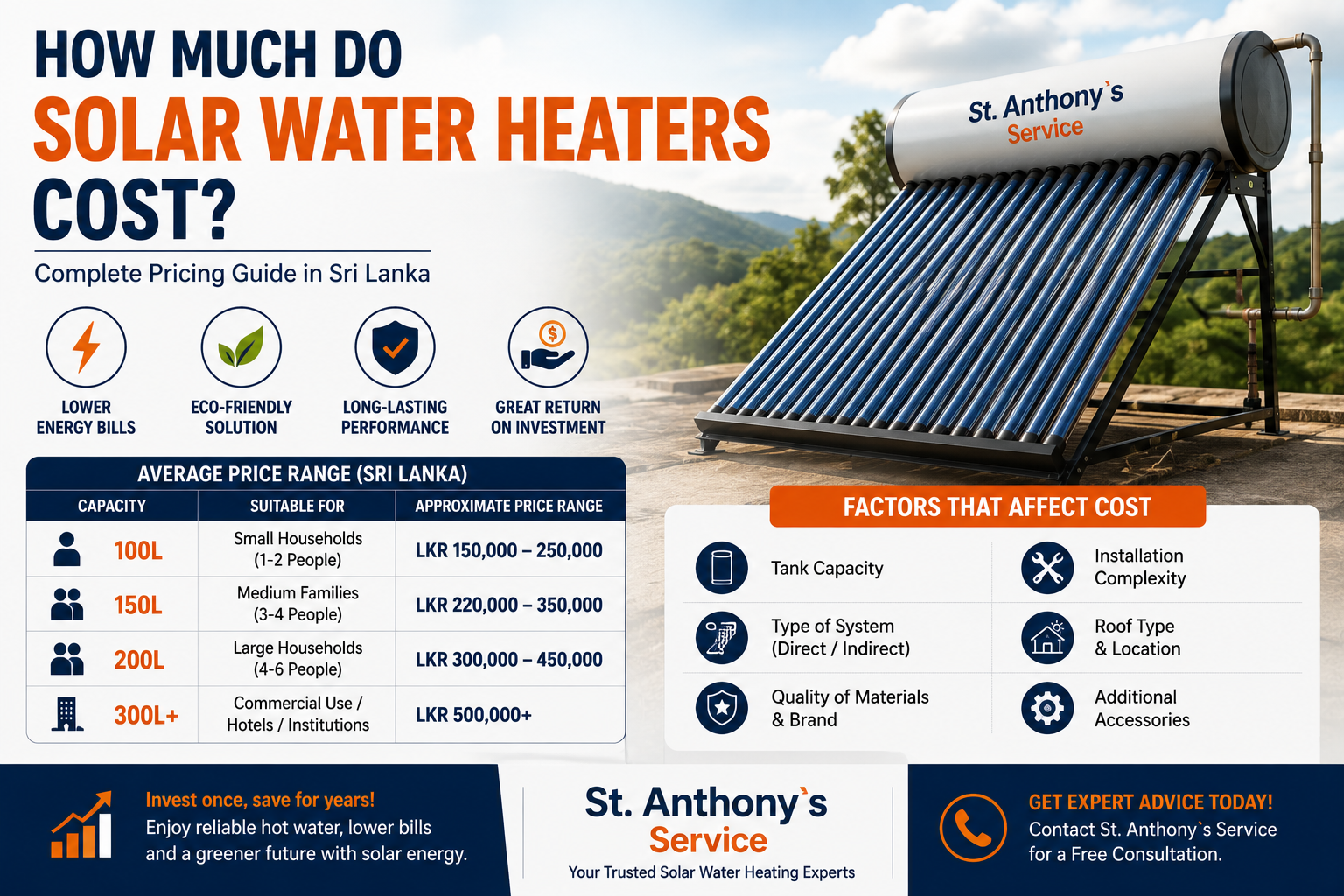
A solar hot water system uses solar energy from sunlight to heat water through rooftop-mounted solar collector panels. The heated water is then stored inside insulated tanks and supplied to bathrooms, kitchens, hotels, apartments, or commercial facilities.
These systems are widely used across Sri Lanka because of the country’s strong sunlight availability throughout the year.
Understanding the main parts of the system helps property owners identify maintenance needs early.
These absorb sunlight and transfer heat to the water.
Evacuated tube systems are particularly popular in Sri Lanka due to their high efficiency.
The insulated tank stores heated water for household or commercial use.
This controls the movement of water between the collectors and the tank.
These regulate pressure levels and protect the system from damage.
Many systems include electric backup heaters for cloudy days or high-demand periods.
Many people assume solar systems require little or no maintenance. While solar water heaters are durable, they still experience wear and tear over time.
Regular servicing ensures the system continues to perform efficiently and safely.
Clean collector panels absorb sunlight more effectively, resulting in faster and more reliable hot water production.
When solar systems operate efficiently, they rely less on electrical backup heating.
Preventive maintenance reduces stress on internal components and helps systems last significantly longer.
Small issues such as minor leaks or valve wear can be identified before they become expensive repairs.
Servicing removes sediment buildup and blockages that reduce water flow.
This is one of the most frequently searched questions in Sri Lanka.
System Type Recommended Servicing
Residential systems Every 12 months
Commercial systems Every 6-12 months
Hotels & heavy-use systems Every 6 months
Coastal or hard water areas More frequent servicing
Properties located in coastal regions may require additional maintenance because salty air accelerates corrosion.
Ignoring early warning signs often leads to major breakdowns.
One of the first signs of trouble is inconsistent water temperature.
Leaks should never be ignored.
A properly functioning system operates quietly.
These sounds often indicate pressure problems or mineral buildup.
Brown or reddish water may indicate corrosion inside the storage tank or pipe system.
If the electric backup heater operates more frequently due to poor solar efficiency, energy bills may rise significantly.
Professional servicing involves a detailed inspection and maintenance procedure.
Technicians carefully inspect:
Both visible and hidden leaks are checked.
Special attention is given to rooftop plumbing and pressure connections.
Internal pressure levels are tested to ensure safe operation.
Excessive pressure can damage the tank and valves.
Sediment and mineral deposits are removed from the tank interior.
This process improves heating efficiency and prevents internal corrosion.
Dust, leaves, and dirt reduce solar absorption efficiency.
Professional cleaning restores collector performance.
Technicians inspect:
The system is tested to ensure:
Several repair issues commonly affect systems over time.
Storage tanks may corrode internally after years of use.
Collector tubes may crack due to:
Damaged pressure valves can cause dangerous pressure buildup.
Hard water areas experience faster mineral accumulation.
Outdoor pipes are continuously exposed to harsh weather conditions.
Damaged insulation also reduces heat retention efficiency.
Servicing costs depend on system size and repair requirements.
Service Type Approximate Price Range
Annual servicing LKR 8,000 - 20,000
Leak repairs LKR 5,000 30,000
Pressure valve replacement LKR 5,000 15,000
Collector repairs LKR 20,000 80,000
Full tank replacement Higher depending on size
Prices vary depending on spare parts, accessibility, and labor complexity.
Several important factors influence total repair expenses.
Larger systems require more labor and replacement materials.
Steep or high rooftops increase installation and repair difficulty.
Imported or specialized parts may cost more.
Minor repairs are much cheaper than full system replacements.
This is another commonly searched topic among homeowners.
Component Estimated Lifespan
Solar collectors 10-20 years
Storage tanks 8-15 years
Valves and fittings 5-10 years
Pipe insulation 5-8 years
Systems that receive regular servicing typically last much longer.
Preventive maintenance significantly improves durability and efficiency.
Annual inspections help identify small problems before they become expensive repairs.
Dust and dirt reduce sunlight absorption.
Even small leaks can eventually cause severe internal corrosion.
Sudden pressure changes may indicate developing problems.
Improper repairs can worsen system damage.
Yes. Most systems retain stored hot water and include electric backup heating.
Yes. Preventive maintenance improves efficiency and reduces repair costs.
Most servicing appointments take between 1–3 hours.
Yes. Minor collector damage can often be repaired without full replacement.
Ignoring maintenance may lead to:
Professional servicing ensures:
DIY repairs often create additional safety risks and may void warranties.
Selecting experienced technicians helps ensure long-term performance and safety.
Preventive servicing is always cheaper than emergency repairs or complete system replacement.
Solar hot water systems are one of the best long-term investments for homes and businesses in Sri Lanka. However, maintaining efficiency and reliability requires proper servicing, inspections, and preventive care.
Understanding common problems, maintenance schedules, repair costs, and lifespan expectations helps property owners protect their systems and avoid expensive breakdowns.
Regular servicing improves heating efficiency, reduces electricity usage, extends system lifespan, and ensures consistent hot water supply throughout the year.
For professional inspections, maintenance, repairs, and expert support, contact St. Anthony`s Service for reliable solar hot water solutions across Sri Lanka.