Home security has become a top priority for homeowners across Sri Lanka - from busy Colombo suburbs to quieter towns in the provinces. With rising concerns about break-ins, package theft, and trespassing, knowing exactly where to place your CCTV cameras makes the difference between footage that solves a crime and blind spots that cost you everything.
This guide breaks down the best camera placement spots for Sri Lankan homes, answers the most common questions homeowners ask, and helps you get the most out of your security investment.
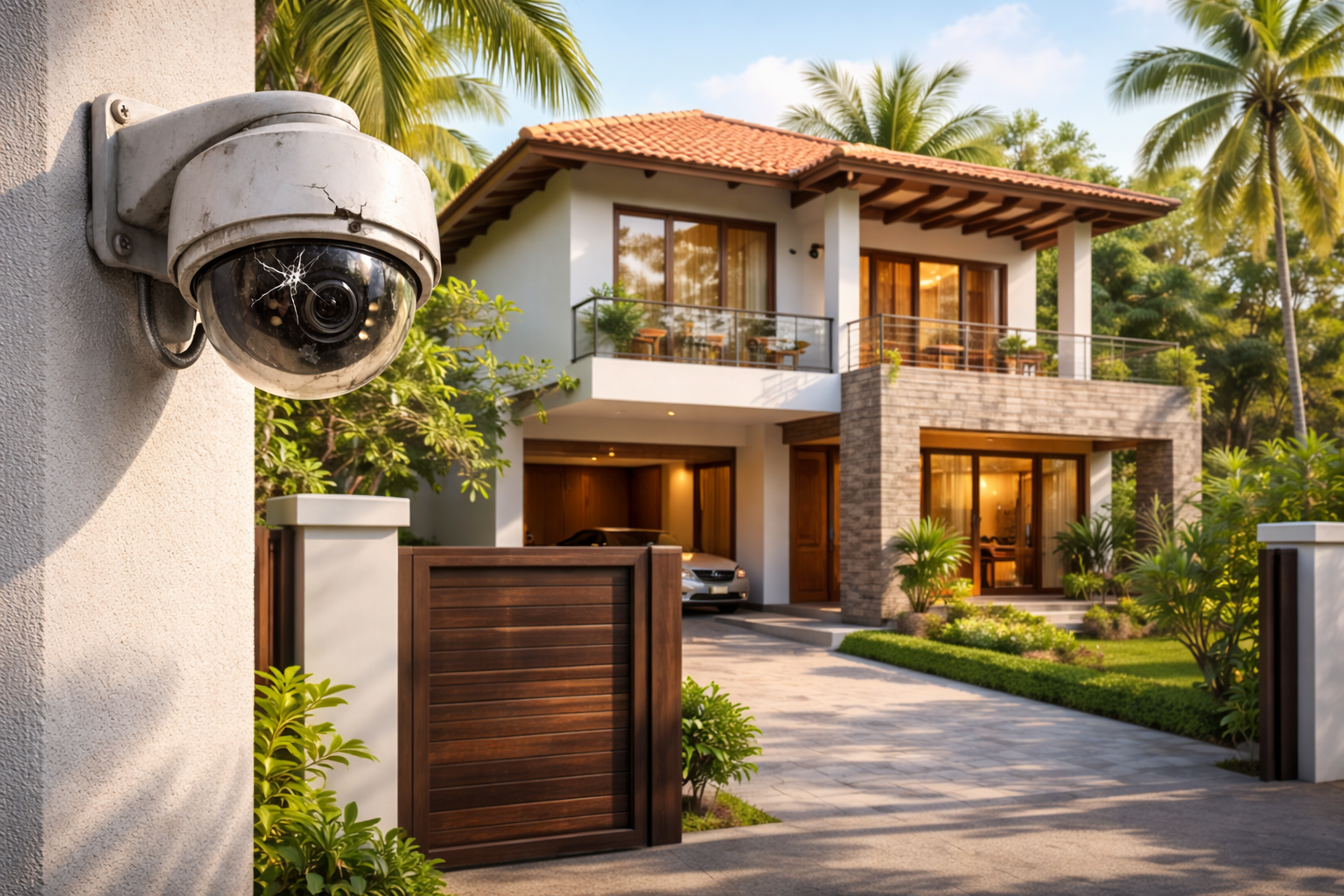
Many homeowners assume buying more cameras means better security. In reality, strategic placement of fewer, well-positioned cameras outperforms a dozen poorly placed ones. A camera pointed at a wall captures nothing useful. A camera covering your front gate captures everything.
Before installation, think about your home's layout, entry points, lighting conditions, and the typical behaviour of intruders. Professional CCTV camera installation and maintenance in Sri Lanka always begins with a site assessment for exactly this reason.
Your front door is the number one entry point for intruders - and the number one spot for delivery theft. A camera here should capture:
Placement tip: Mount the camera 8-10 feet high, angled slightly downward. Avoid pointing it directly into sunlight (common in Sri Lanka's west-facing homes during evening hours).
Burglars prefer rear and side entries because they are hidden from the street. These spots are often overlooked - making them prime targets.
Cover every door that leads outside, including:
Vehicles are high-value targets. A camera covering the garage or carport protects your car and also acts as a secondary monitor for the driveway and front perimeter.
In Sri Lanka, many homes have open carports rather than enclosed garages - a wide-angle camera positioned at the corner of the roof line works best here.
A driveway camera serves double duty: it monitors vehicles entering the property and provides an early warning when someone approaches the house on foot. This is especially valuable in homes with long driveways or properties set back from the road.
Pair this with motion-activated lighting for maximum deterrence - a well-lit, camera-covered driveway is one of the strongest deterrents you can have.
In Sri Lanka, most residential properties are surrounded by compound walls. Cameras mounted to cover the top of walls or garden perimeters can catch intruders before they enter the property, giving you more response time.
Look for cameras rated for outdoor use with IP65 or higher weatherproofing - essential given Sri Lanka's tropical climate and heavy monsoon rains.
Windows - especially those not visible from the street - are common forced-entry points. A camera covering ground-floor windows on the side or rear of your home adds a critical layer of protection.
Indoor cameras can also be positioned to view windows from the inside, which avoids external weathering concerns entirely.
If your security is ever breached, indoor cameras ensure you still have footage of the intruder's movements inside your home. Stairways and main hallways are the best indoor placement points because all movement between floors and rooms passes through them.
These cameras are also useful for monitoring household staff, children, and elderly family members.
High-value items - jewellery, cash, important documents - deserve direct surveillance. A discreet indoor camera covering the area where valuables are stored provides evidence in the event of theft, including theft by someone with legitimate access to your home.
Step 1 - Map your property
Draw a rough sketch of your home showing all doors, windows, the driveway, garden, and perimeter walls.
Step 2 - Identify all entry and exit points
Mark every way a person could enter your property - including walls they could climb.
Step 3 - Identify blind spots
Walk around your home and note areas not visible from the street, from neighbours, or from existing lights.
Step 4 - Decide on camera types
Step 5 - Check lighting conditions
Note which areas are dark at night. Consider cameras with infrared (IR) night vision - essential for Sri Lankan homes where outdoor lighting is often minimal.
Step 6 - Choose your recording and storage method
Options include DVR/NVR systems with hard drives, cloud storage, or a hybrid. Discuss with your installer what suits your budget and internet connection.
Step 7 - Professional installation
A qualified technician ensures correct cable routing, weatherproofing, angle calibration, and system testing. For reliable CCTV installation and maintenance across Sri Lanka, always use a certified service provider.
This is one of the most searched questions about home CCTV. The honest answer depends on your property size, but here are general guidelines:
Property Type Recommended Cameras
Small apartment / flat 2-3 cameras
Standard single-storey house 4-6 cameras
Two-storey house with garden 6-10 cameras
Large property with compound wall 10-16+ cameras
A professional site visit from a trusted provider like St. Anthony's Service will give you an accurate recommendation specific to your home.
Q: Can I install security cameras myself?
echnically yes, but it's not recommended. Incorrect placement creates blind spots. Poor cable routing causes early failures. Incorrect angle calibration wastes the camera's field of view. Professional installation ensures everything works correctly from day one - and most warranties require it.
Q: What type of CCTV camera is best for outdoor use in Sri Lanka?
Given the tropical climate, look for cameras with at least IP65 weatherproofing, IR night vision, and wide dynamic range (WDR) to handle bright sunlight and deep shadows. Bullet cameras are popular for outdoors; dome cameras are harder to vandalise and work well under eaves.
Q: How long does CCTV footage get stored?
Standard setups store 7-30 days of footage depending on storage capacity and recording resolution. Motion-triggered recording extends storage life significantly. Cloud-based plans may offer longer retention.
Q: Can I view my cameras remotely from my phone?
Yes. Most modern DVR/NVR systems support mobile viewing via apps. Your installer should configure remote access as part of the setup.
Q: Do CCTV cameras work during power cuts?
Standard cameras stop working during power cuts unless connected to a UPS (Uninterruptible Power Supply) or battery backup. This is something to discuss with your installer, especially in areas of Sri Lanka that experience regular load shedding.
Q: Are CCTV cameras legal to install in Sri Lanka?
Yes, CCTV cameras are legal for use on private residential property. You should ensure cameras do not record in a way that intrudes on neighbours' private spaces or public areas beyond your property boundary.
Q: How often do CCTV systems need maintenance?
A professional check every 6-12 months is recommended. This includes cleaning lenses, checking cable integrity, testing night vision, and verifying recording functionality. Skipping maintenance is a common reason systems fail exactly when they're needed. St. Anthony's Service offers ongoing CCTV maintenance and repair across Sri Lanka to keep your system running reliably year-round.
Q: What is the cost of CCTV installation in Sri Lanka?
Costs vary depending on the number of cameras, camera quality, cable length, and recording equipment. Basic 4-camera setups start from a few tens of thousands of rupees; professional multi-camera systems for larger homes can go significantly higher. Getting a proper quote from a certified installer is the best way to budget accurately.
"Best CCTV camera for home in Sri Lanka"
Look for brands with local after-sales support, weatherproof outdoor ratings, and HD resolution (at least 1080p). Your installer can recommend models that balance quality and budget.
"CCTV installation cost in Sri Lanka"
Costs depend on camera count, type, and property complexity. Always get a site-assessed quote rather than relying on generic pricing.
"Can CCTV cameras work without internet?"
Yes. Locally stored DVR/NVR systems record continuously without an internet connection. Internet is only needed for remote viewing.
"Night vision CCTV cameras Sri Lanka"
IR night vision cameras are essential in Sri Lanka, where outdoor lighting is often limited. Look for cameras with a night vision range of at least 20-30 metres for driveways and garden coverage.
"CCTV camera maintenance Sri Lanka"
Regular maintenance prevents system failures. A professional inspection twice a year is the recommended standard.
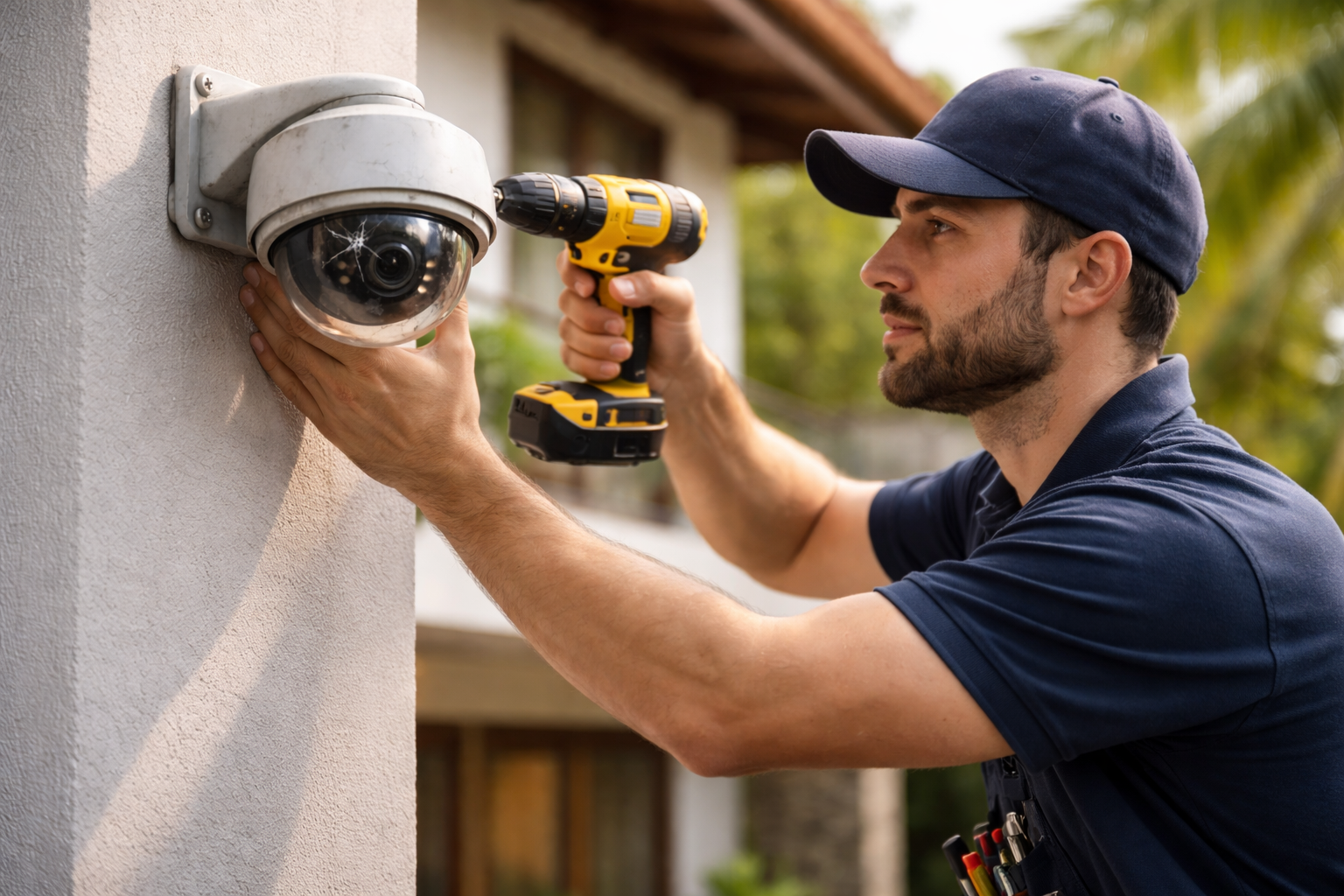
A home security system is only as good as its weakest point. Professional installers bring:
St. Anthony's Service is a trusted provider of CCTV camera installation, maintenance, and repair in Sri Lanka, helping homeowners build security systems that actually work.
Whether you are installing CCTV for the first time or upgrading an existing system, the right placement strategy and professional installation make all the difference.
Contact St. Anthony's Service today to book a free site assessment and get a customised security camera plan for your home.
Published by St. Anthony's Service - Sri Lanka's trusted partner for home security solutions.