A Solar Hot Water System is one of the smartest long-term investments for homes and businesses in Sri Lanka. It helps reduce electricity bills, provides reliable hot water, and supports energy-efficient living. However, like any mechanical system, regular maintenance is essential to keep it operating efficiently.
Ignoring early warning signs can lead to expensive repairs, poor performance, or even complete system failure. Many property owners only notice problems after losing hot water entirely - by then, the repair costs can be much higher.
In this guide, St. Anthony`s Service explains the most common signs that indicate your solar hot water system needs immediate servicing before it fails completely.
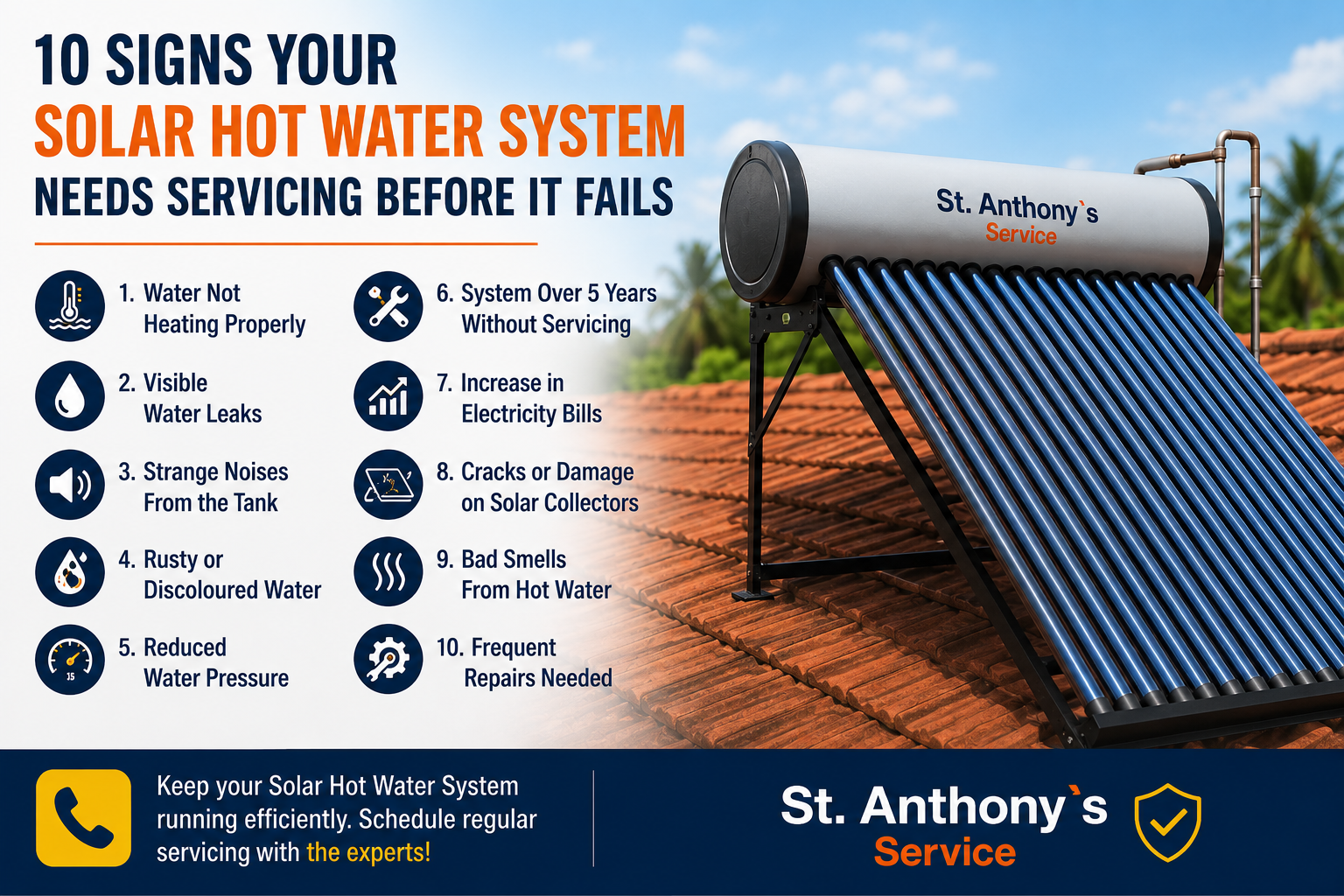
A solar hot water unit works continuously under harsh outdoor conditions. Heat exposure, mineral buildup, aging components, leaking valves, and damaged pipes can gradually reduce performance over time.
Routine servicing helps:
If you are using a residential or commercial solar water heating system, annual inspections are highly recommended.
For professional Solar Hot Water System maintenance and repairs, expert servicing ensures your unit remains safe and efficient year-round.
One of the first signs of trouble is inconsistent or insufficient hot water.
Several issues may be responsible:
If the issue continues, professional servicing is necessary before internal damage worsens.
Leaks are among the most serious warning signs.
Even small drips can indicate internal pressure problems or deteriorating components.
Ignoring leaks can cause:
A professional technician can identify whether the leak requires simple sealing or major component replacement.
A healthy solar hot water system should operate quietly.
If you hear banging, rumbling, hissing, or bubbling sounds, internal issues may already be developing.
Sediment Accumulation: Mineral deposits collect at the bottom of the tank over time. When heated, trapped water beneath the sediment creates popping sounds.
Pressure Issues: High pressure inside the system can produce whistling or hissing noises.
Air Trapped in Pipes: Airlocks often create bubbling sounds and reduce water circulation efficiency.
Ignoring these noises may eventually lead to:
Clean hot water should appear clear and odour-free.
Brown, reddish, or cloudy water often indicates corrosion inside the tank or pipes.
If only hot water is affected, your solar hot water system likely needs urgent inspection.
Low hot water pressure can significantly affect daily comfort.
Professional flushing and maintenance often restore normal performance before major damage occurs.
Many homeowners assume solar water heaters are maintenance-free. Unfortunately, this misconception often leads to premature failure.
System Type Recommended Service Interval
Residential systems Every 12 months
Commercial systems Every 6-12 months
High mineral water areas More frequent inspections
Even if your system appears functional, preventive servicing helps avoid sudden breakdowns.
Many solar hot water systems include electric backup heating.
When solar efficiency drops, the backup heater works harder - increasing energy consumption.
Regular maintenance includes:
This ensures your solar system performs efficiently and minimizes unnecessary electricity usage.
Solar collectors are constantly exposed to harsh sunlight, rain, wind, and debris.
Physical damage can seriously affect system performance.
Damaged collectors reduce heat absorption and may eventually leak internally.
Unpleasant smells from hot water taps often indicate bacterial growth or internal tank issues.
Rotten Egg Smell: Usually caused by bacteria reacting with tank components.
Metallic Smell: Often linked to rust or corrosion.
Musty Odour: Can indicate stagnant water or poor circulation.
Internal cleaning and flushing remove buildup, bacteria, and contaminants while protecting the tank from long-term damage.
If your solar hot water system keeps developing issues, it is a strong sign that a complete professional inspection is overdue.
A comprehensive inspection can identify:
Timely servicing often prevents complete replacement costs.
This is one of the most searched questions about solar hot water maintenance.
Most systems should be serviced every 12 months.
However, servicing frequency may increase if:
Regular inspections help extend system lifespan significantly.
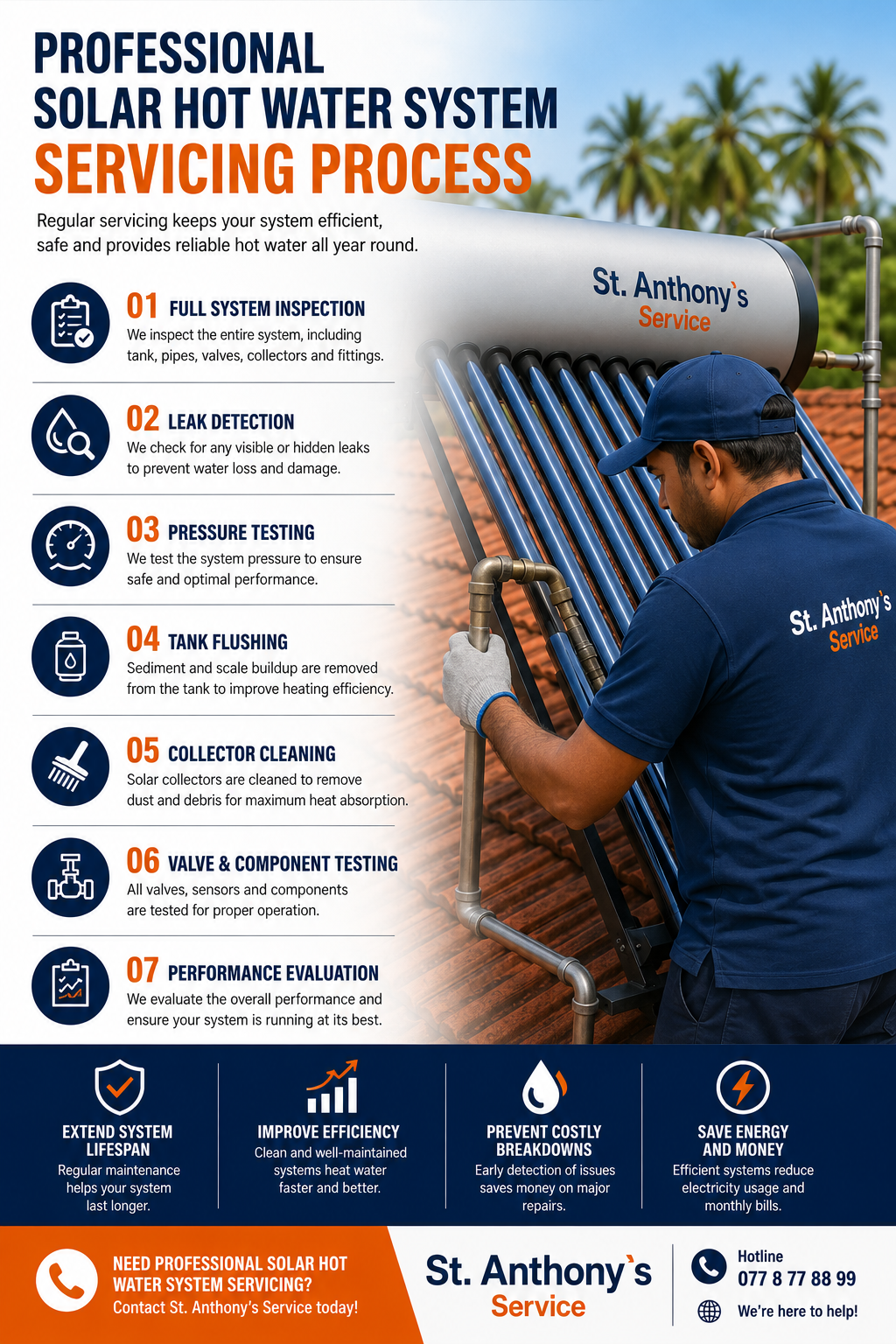
Professional servicing usually includes the following:
Technicians inspect:
All visible and hidden leaks are checked.
Pressure levels are tested to ensure safe operation.
Sediment buildup is removed from inside the storage tank.
Dust and debris are cleaned from solar panels to improve heating performance.
Critical parts are tested for wear and efficiency.
The complete system is checked to ensure proper heating and circulation.
With proper maintenance, many systems can last 10-20 years.
Basic visual inspections are possible, but professional servicing is strongly recommended due to pressure systems, roof access, and internal components.
Ignoring maintenance can lead to leaks, corrosion, poor heating efficiency, expensive repairs, or total system failure.
No, but prolonged poor performance during sunny conditions may indicate servicing is needed.
Yes. Preventive maintenance helps detect small problems before they become major failures.
A properly maintained Solar Hot Water System provides reliable hot water, lower energy costs, and long-term efficiency. However, warning signs should never be ignored.
Issues such as leaks, strange noises, poor heating performance, rusty water, and rising electricity bills often indicate developing internal problems.
Early servicing not only prevents sudden breakdowns but also extends the overall lifespan of your system.
If you notice any of these warning signs, professional maintenance can help restore efficiency before major repairs become necessary.
For expert inspections, repairs, and maintenance solutions, contact St. Anthony`s Service and keep your solar hot water system operating safely and efficiently all year round.